The French Hotel Selection Blueprint: Elegant Rooms, Strategic Locations & Exceptional Travel Experiences
The French Hotel Selection Blueprint: Elegant Rooms, Strategic Locations & Exceptional Travel Experiences
Choosing the right hotel in France is an exercise in understanding how architecture, comfort, location, service and personal travel habits interact. The most successful hotel selection is rarely based on a single photograph or a simple star classification. Instead, it comes from examining the entire experience: how the room receives daylight, how easily luggage can be organized, how quiet the sleeping area is, how practical the bathroom feels, how close the property is to the places that matter, and how naturally the hotel fits into the rhythm of the journey.
France is particularly interesting because hotel experiences vary enormously from one destination to another. A historic Parisian building may offer tall windows, decorative molding and compact but highly characterful rooms. A property in Nice may emphasize balconies, natural light and Mediterranean textures. Lyon can combine historic architecture with contemporary comfort, while Marseille often creates a stronger relationship between urban accommodation and the Mediterranean landscape.
This variety means that hotel selection should be approached as a design and planning decision rather than a simple transaction. The traveler is not only purchasing a room. The traveler is choosing a temporary environment in which mornings begin, luggage is stored, evenings end, and daily movement is organized.
A broad starting point such as Hotels & Resorts in France can help frame the search, but the professional step is to determine what characteristics actually matter for the specific trip.

The Hotel Room as the Foundation of the Journey
The hotel room is the place where the traveler resets between experiences. After hours of walking through museums, historic streets, shopping districts or coastal promenades, the quality of the room becomes increasingly important. A comfortable bed, effective curtains, good temperature control and quiet surroundings can influence how ready a traveler feels for the next day.
For this reason, room quality should be evaluated according to real usage rather than staged appearance. Imagine the room with two open suitcases, jackets hanging from chairs, phones charging beside the bed and toiletries spread across the bathroom counter. If the room still appears functional under those conditions, the design is likely working well.
Professional hotel evaluation therefore begins with circulation. Can a person walk around the bed comfortably? Can luggage be opened without blocking the main pathway? Is there a place to sit that is not the bed? Is there somewhere to work? Can two people use the bathroom without constantly competing for space?
These questions may seem ordinary, but they are precisely the details that distinguish a room that photographs beautifully from one that remains comfortable throughout a multi-day stay.
Why the Exact Room Category Matters
Hotel categories can be confusing because terminology varies between properties. Terms such as classic, superior, deluxe, executive and premium may sound hierarchical, but their practical differences can be surprisingly specific.
One category may offer more floor space. Another may provide a better view. A third may include a balcony or separate seating area. A fourth may simply occupy a higher floor. Travelers should therefore avoid assuming that the most expensive category automatically delivers the characteristics they personally value.
When comparing a Hotel in Paris, this distinction becomes especially relevant because historic buildings can have irregular floor plans. Two rooms with similar names may differ in ceiling height, window position, hallway width, bathroom layout and natural light.
The same principle applies throughout France. A room upgrade is meaningful only when its additional characteristics improve the actual travel experience. More square meters are valuable if additional space is needed. A balcony is valuable if the traveler intends to use it. A view is valuable if it is genuinely distinctive.
Reading Hotel Photography Like a Professional
Hotel photography is a powerful research tool when it is interpreted carefully. Instead of simply asking whether a room looks beautiful, examine what the photograph communicates about functionality.
Start with the bed. Observe how much space surrounds it and whether the bedside tables appear large enough for practical use. Look for reading lamps, switches and electrical outlets. Examine the floor and identify whether there is enough clear space to move comfortably.
Then study the window. Is the room bright? Does the window appear to face an attractive exterior? Are blackout curtains visible? Does the curtain system look capable of providing privacy?
Next, examine furniture. A desk should have enough depth for a laptop, while a chair should appear comfortable enough for extended use. A decorative chair placed beside a window may be attractive but less useful than a properly designed work chair.
Finally, inspect what the photograph does not show. Where is the wardrobe? Where does luggage go? How large is the bathroom? Are there additional storage surfaces? Missing information is not necessarily negative, but it indicates where further research may be necessary.
Parisian Hotel Design and the Importance of Proportion
Paris offers some of the most recognizable hotel interiors in France, but the appeal of Parisian design is not simply about decoration. Proportion plays a major role.
Tall windows can make compact rooms feel more generous. High ceilings can create vertical breathing room. Traditional molding can add visual rhythm. Herringbone floors can introduce texture without overwhelming the room.
When these elements are combined with contemporary furniture, the result can feel both historic and current. The best interiors do not necessarily reproduce the past. Instead, they preserve architectural identity while adapting the room to modern expectations.
Travelers should also recognize that historical architecture can involve compromises. A beautiful building may have smaller bathrooms, irregular corridors, unusual room shapes or limited elevator capacity. These characteristics are not automatically disadvantages; they simply need to be considered as part of the experience.
Location Is an Amenity
A hotel location should be considered as seriously as the room itself. Every day of a trip involves movement, and the hotel determines where those movements begin and end.
A property located near the places that matter can save time, simplify transportation and make spontaneous decisions easier. Travelers can return to the room during the afternoon, change clothing, rest briefly and continue the evening without sacrificing a large amount of time.
Conversely, a beautiful hotel in an inconvenient location can introduce repeated friction. Even if each individual journey is manageable, the accumulated time can become significant over several days.
The professional approach is therefore to map the itinerary before selecting the neighborhood. Instead of asking whether the hotel is “central,” identify where the traveler will actually spend time.
Neighborhood Selection in Paris
Paris should be treated as a collection of distinct environments rather than a single homogeneous city. Travelers interested in museums may prefer one area, while food-focused travelers may prioritize another. Business travelers may need proximity to specific offices or transport connections, while leisure travelers may want a neighborhood that encourages walking.
The hotel should support the intended rhythm of the visit. A traveler planning early mornings may value a quiet street and convenient transport. Someone focused on evening dining may prefer an area with restaurants within walking distance.
The relationship between hotel and transportation is also important. A property near a useful metro connection can make the city feel considerably more accessible.
This is why the address should be evaluated in relation to the complete itinerary rather than simply its distance from a famous landmark.
Natural Light and Room Orientation
Natural light affects the perceived size, atmosphere and energy of a room. A space with generous daylight can feel open and welcoming, while a larger room with limited natural light may feel more enclosed.
Orientation matters as well. Morning light can be pleasant for travelers who wake early. Afternoon light can create beautiful interiors but may also increase indoor temperature during warmer months.
Blackout curtains are therefore important. A well-designed hotel room should give guests control over both light and privacy.
Travelers should also understand that a large window does not automatically mean a beautiful view. The window may face another building, a narrow courtyard or a busy street. When the view is a major reason for choosing a room, the exact orientation should be confirmed.
Nice and the Mediterranean Room Philosophy
Hotel design in Nice often benefits from the character of the Mediterranean environment. Strong daylight, coastal air, outdoor living and lighter architectural palettes can influence room design.
Travelers searching for a Hotel in Nice should consider how effectively the property connects indoor and outdoor experiences.
A balcony can provide genuine value when it is private, comfortably furnished and oriented toward an attractive setting. A terrace can function almost like an additional room when there is enough space for seating.
Natural materials and lighter textiles can also complement the climate. However, visual design should always be accompanied by effective temperature control, especially during warm periods.
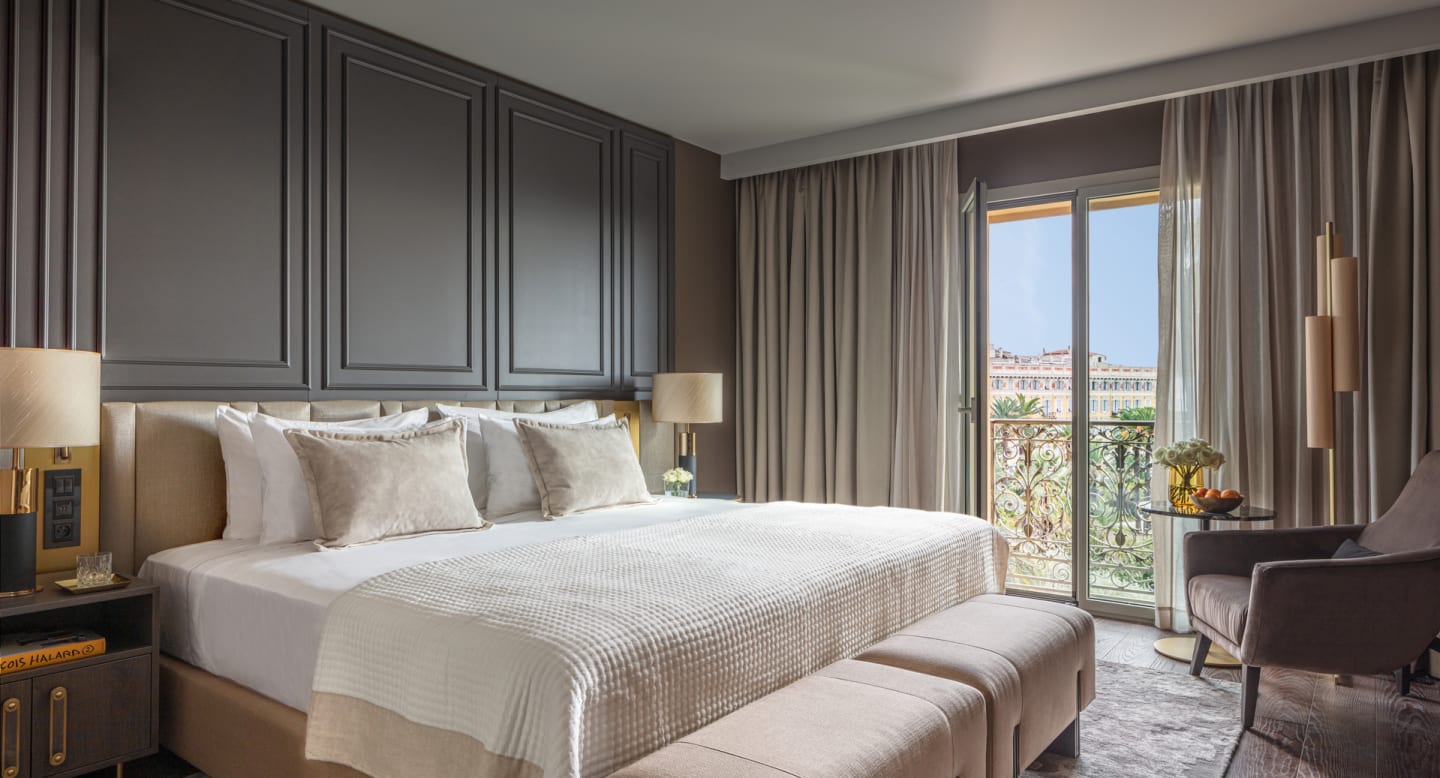
Balcony Versus Terrace: Understanding the Difference
Outdoor space is frequently used as a selling point, but travelers should distinguish between a small balcony and a genuine terrace.
A balcony can be valuable for morning air, a short break or a city view. A terrace generally provides greater usability because it may accommodate chairs, a table and more movement.
Privacy is another consideration. A technically private balcony that directly faces neighboring rooms may not feel especially private.
Sun exposure should also be considered. An outdoor space facing strong afternoon sunlight may require shade to remain comfortable.
The correct question is not whether a hotel room has outdoor space, but whether that space will actually be used during the trip.
Lyon and the Balance Between Heritage and Modernity
Travelers comparing Hotels in Lyon will often encounter a combination of historical character and contemporary design.
This creates an interesting hotel environment because properties may occupy buildings with traditional proportions while offering modern amenities. The result can be especially appealing to travelers who appreciate architecture but do not want to sacrifice contemporary comfort.
Lyon is also a city where location should be considered in relation to the traveler’s interests. Food-focused trips, business travel, cultural exploration and railway connections can each lead to different accommodation priorities.
A hotel room with beautiful architectural details is more useful when the property also supports the daily itinerary. Design and practicality should therefore be evaluated together.
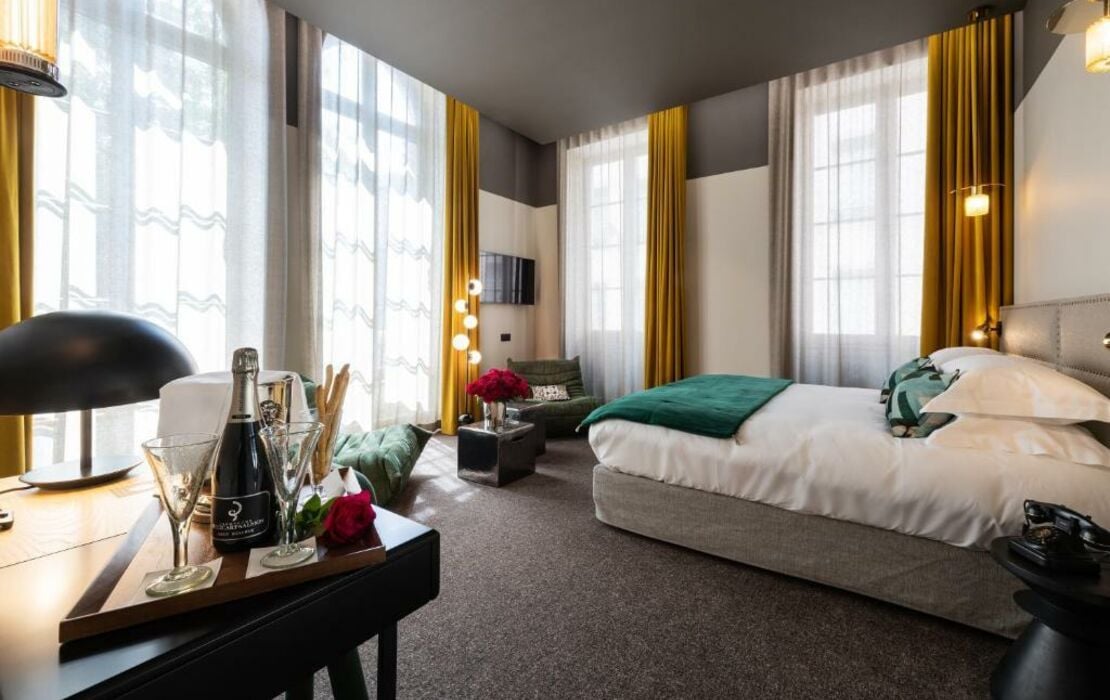
Marseille: Urban Energy and Mediterranean Atmosphere
Marseille introduces a different relationship between hotel and destination. The city combines historic districts, a major harbor, dense urban areas and access to Mediterranean landscapes.
Travelers comparing Hotels in Marseille should first decide how the property will function within the itinerary.
A traveler interested primarily in urban exploration may prioritize access to historic neighborhoods, restaurants and public transportation. A traveler focused on coastal experiences may place greater emphasis on sea views, balconies, outdoor spaces and access to waterfront areas.
The distinction is important because a location that is excellent for one style of trip may be less practical for another.

The Bed as the Most Important Piece of Furniture
The bed is the foundation of hotel comfort. Even travelers who spend almost the entire day outside depend on the room to provide reliable recovery.
Mattress firmness is personal, but there are several objective factors worth examining. The bed should have enough surrounding space to move comfortably. Pillows should appear plentiful enough to accommodate different sleeping positions. Bedside lighting should be accessible without requiring guests to stand.
Temperature also influences sleep. Heavy bedding can be uncomfortable in warm climates unless climate control is effective. Conversely, lightweight bedding may not be sufficient during colder periods.
Travelers should look for repeated review comments about mattress comfort, pillow quality and nighttime temperature rather than relying solely on promotional photographs.
Bathroom Design as a Quality Test
The bathroom often reveals whether a hotel room was designed around actual use. A beautiful sink and attractive tiles are valuable, but practical details matter just as much.
Counter space should accommodate toiletries. Towels should be easy to reach. Shower controls should be positioned logically. Ventilation should be effective, and lighting should be sufficient around the mirror.
Walk-in showers can be excellent when drainage, water pressure and temperature control are reliable. A bathtub can be useful for travelers who value long bathing, but it may occupy valuable space in a compact room.
The correct configuration depends on the traveler. There is no universal bathroom design that works equally well for every guest.
Storage: The Feature Travelers Notice Too Late
Storage is rarely the first feature mentioned in hotel advertising, yet it becomes increasingly important after the first night.
A well-designed wardrobe allows clothing to be organized rather than left in luggage. Drawers can keep smaller belongings under control. A luggage bench provides a practical place to open and close suitcases without placing them directly on the floor.
For couples and families, storage requirements increase significantly. The same room that feels generous to a solo traveler can feel crowded when two people bring several bags.
Long-stay travelers should pay particular attention to storage because the room becomes a temporary living environment rather than simply an overnight base.
Lighting for Morning, Evening and Everything Between
Lighting should support the complete daily cycle. Morning requires clear illumination for dressing and preparing for the day. Afternoon may rely heavily on natural light. Evening calls for warmer and softer lighting.
Bedside lamps should ideally operate independently. Desk lighting should support focused work. Bathroom lighting should provide sufficient clarity without feeling excessively harsh.
Accent lighting can add atmosphere, but it should not replace practical illumination.
When examining photographs, travelers can look for several separate light sources. A combination of ceiling, bedside, wall and desk lighting usually indicates a more flexible design.
Quietness and the Architecture of Sleep
A quiet room is one of the most valuable hotel features because noise can be difficult to solve after arrival.
External noise may come from traffic, nightlife, construction or nearby public spaces. Internal noise may come from corridors, elevators, staircases, neighboring rooms or mechanical systems.
Travelers should look for repeated review comments rather than isolated complaints. If many recent guests mention the same noise issue, the pattern deserves attention.
Room orientation can sometimes help. Courtyard-facing rooms may be quieter than street-facing rooms, while rooms positioned away from elevators and staircases can reduce corridor traffic.
Workspace Design for Modern Hotel Guests
The traditional distinction between business and leisure travel has become increasingly flexible. Travelers may work remotely, manage businesses, answer emails, attend virtual meetings or organize digital projects while traveling.
A proper workspace therefore has real value. The desk should be large enough for the intended equipment, the chair should provide support, and electrical outlets should be easy to reach.
Natural light can improve the workspace, but direct sunlight may create glare. Adjustable curtains and appropriate task lighting help solve this problem.
Travelers who expect to work regularly should examine the workspace as carefully as the bed.
French Boutique Hotels and Individuality
Boutique hotels can offer a strong sense of individuality. Rooms may use custom furniture, unusual artwork, historic architecture or locally inspired materials.
The main advantage is character. The main consideration is consistency. Because boutique hotels often occupy converted buildings, room sizes and configurations may vary.
This makes the exact room description particularly important. Travelers should not assume that all rooms in a boutique property have the same layout.
A boutique property can be an excellent fit for travelers who want the hotel itself to contribute to the destination experience.
Larger Hotels and Operational Convenience
Larger hotels often offer broader facilities, larger reception areas, multiple dining options, meeting rooms, fitness centers, room service and more extensive operational support.
These features can be especially useful for families, business travelers and longer stays.
The trade-off may be a less intimate atmosphere. Travelers who value individuality may prefer a smaller property even when a larger hotel provides more facilities.
The correct decision depends on what the hotel needs to accomplish during the journey.
Architecture Versus Room Size
Historic French buildings often create an interesting question: should travelers prioritize architectural character or room size?
The answer depends on personal priorities. Some travelers value tall ceilings, original flooring and historic details enough to accept a more compact room. Others prefer modern proportions, larger bathrooms and generous storage.
Neither approach is inherently correct. The important factor is understanding the trade-off before booking.
A room can be small but memorable because of its architecture. It can also be large and comfortable but visually neutral. The right choice depends on how the traveler expects to use the room.
The Role of Public Spaces
When bedrooms are compact, public spaces can provide additional value. A hotel lounge can become a reading area, workspace or place for a quiet break.
Courtyards, terraces, libraries and rooftop areas can extend the usable space of the property beyond the bedroom.
Travelers should consider how much time they expect to spend inside the hotel. Someone who spends all day sightseeing may not need extensive public areas. A long-stay traveler may value them significantly.
Breakfast as Part of the Daily Rhythm
Breakfast should be evaluated according to travel style. A full breakfast can simplify mornings, but travelers who enjoy exploring local bakeries may prefer accommodation without an elaborate breakfast package.
Early departures make flexibility particularly important. A hotel offering an early breakfast or takeaway option may be more practical than one with a beautiful breakfast room that opens late.
Business travelers may prioritize speed, while leisure travelers may enjoy breakfast as part of the hotel's atmosphere.
Transportation and the Hotel Decision
Accommodation and transportation should not be treated as separate decisions. The hotel location influences the practicality of every movement made during the trip.
Travelers planning to use a car should evaluate parking, traffic access and the distance between the hotel and major roads. Travelers relying on trains or public transportation should identify useful stations and connections.
For selected itineraries, Car rentals in Paris can be considered when the journey extends into regions where a vehicle becomes useful.
For wider road trips, Car rentals in France should be evaluated according to the actual driving portion of the itinerary rather than assuming a vehicle is needed for every day.
Travelers exploring the Riviera may also consider Car rentals in Nice when regional excursions make independent transportation valuable.
Airport Strategy and Hotel Location
The first and final hotel nights can require different priorities from the middle of a trip. After a long flight, travelers may prefer a property with easy airport access. Before an early departure, reducing transfer complexity can become more important than sightseeing proximity.
For Paris arrivals, reviewing Flights to Paris Charles de Gaulle Airport (CDG) alongside accommodation and transfer arrangements can help create a smoother arrival strategy.
This approach is particularly useful for multi-city itineraries where the first night is primarily about recovery and the final night is primarily about departure logistics.
Family Hotel Selection
Families require a different approach to room evaluation because several people share the same space. Sleeping arrangements, bathroom access, storage, seating and circulation all become more important.
Connecting rooms can provide privacy while keeping family members close. Suites can provide greater separation between sleeping and living areas.
Parents should also consider the practical reality of luggage. Children's belongings can increase the amount of storage needed considerably.
The best family room is not necessarily the largest. It is the room whose layout allows multiple people to function without constantly obstructing one another.
Couples and the Emotional Character of a Room
For couples, atmosphere can become a central part of the accommodation experience. Lighting, views, privacy, seating and materials influence the emotional quality of the space.
A comfortable chair near a window can create a simple morning ritual. A balcony can provide a private place to sit after dinner. Soft bedside lighting can transform the room in the evening.
Romantic design does not require excessive decoration. Balanced proportions, good bedding, quietness and natural light can create a stronger atmosphere than an overloaded interior.
Long-Stay Hotel Requirements
Long stays expose weaknesses that may remain invisible during a two-night visit. Storage becomes more important, as does seating. A desk may become essential, and laundry access can significantly affect convenience.
The neighborhood also becomes part of the accommodation. Grocery stores, cafés, pharmacies, parks and transportation connections may matter more than proximity to one famous attraction.
Travelers staying for a week or more should imagine the hotel as a temporary apartment. The room should support daily living rather than simply sleeping.
Seasonal Hotel Planning
Season affects hotel requirements. Summer travel may make air conditioning, blackout curtains and outdoor spaces particularly valuable. Winter travel may increase the importance of heating, insulation and cozy interiors.
Spring and autumn encourage more walking, making neighborhood selection particularly important.
Seasonal daylight can also change the way a room feels. A bright summer room may feel different from the same room during winter when daylight hours are shorter.
Climate Control and Thermal Comfort
Temperature control should be treated as a practical requirement rather than a luxury feature. Travelers should determine whether rooms have individually controlled systems and whether recent reviews mention climate performance.
Large windows can increase natural light but may also increase heat gain. Good curtains, effective glazing and appropriate climate control work together to maintain comfort.
For travelers visiting warm destinations, this can be particularly important.
Storage, Charging and Digital Convenience
Modern travelers often carry multiple electronic devices. Phones, tablets, cameras, laptops and watches all require charging.
Electrical outlets near the bed are particularly useful. USB charging can be convenient, but standard outlets remain important because travelers use different equipment.
A practical hotel room should also provide a secure location for important belongings and sufficient desk space for devices.
Technology should support comfort rather than overwhelm the room. The best systems are usually simple and intuitive.
How to Interpret Hotel Reviews
Hotel reviews become much more valuable when read as data rather than emotional commentary.
Repeated observations about a mattress, air conditioning, noise, shower pressure or room cleanliness provide useful information.
Reviewers also have different expectations. A traveler accustomed to large suburban hotel rooms may find a compact Parisian room smaller than expected, while a frequent city traveler may consider the same room perfectly functional.
The professional reader therefore looks for specific facts and patterns rather than relying entirely on overall sentiment.
Recent Reviews Versus Older Photographs
Hotels evolve. Rooms are renovated, furniture is replaced, management changes and services are modified.
For this reason, recent reviews can sometimes provide more useful information than older promotional photography.
Travelers should compare the date of photographs and reviews whenever possible. If the room appears recently renovated but the reviews describe an older interior, additional research may be worthwhile.
Maintenance Is a Form of Luxury
Maintenance determines whether design continues to feel premium. A room with simple materials can feel excellent when everything is clean, functional and well preserved.
Conversely, an expensive room can feel disappointing if furniture is damaged, fabrics are worn or bathroom fixtures show signs of neglect.
Travelers should therefore look at details such as flooring edges, upholstery, curtains, bathroom fittings and wall surfaces when examining photographs.
Materials That Create French Character
French interiors often rely on material contrast rather than strong colors. Wood can provide warmth, stone can create solidity, linen can soften the room and metal details can add refinement.
Historic properties may preserve original parquet, plasterwork, stone or decorative elements. Contemporary properties may reinterpret these materials through simplified forms.
The result can be sophisticated without becoming overly ornate.

French Countryside Design and the Power of Texture
Although major cities attract much of the attention, French countryside hotels offer another important perspective on accommodation design. Historic properties may use exposed beams, natural stone, timber floors, textured walls and traditional architectural details.
These rooms demonstrate how texture can create character without relying on excessive decoration. A simple bed can feel distinctive when framed by original architecture.
For travelers combining urban and rural destinations, contrasting hotel styles can make the overall itinerary more varied.
Visual Calm and Negative Space
One of the most effective tools in professional interior design is negative space. Empty areas allow important objects to stand out and give the room visual breathing room.
This is especially useful in hotel rooms because guests bring their own belongings. A room that is already visually crowded has little capacity for personal items.
Minimalism does not necessarily mean a lack of personality. It can instead mean that each element has a clear purpose.
Why Simplicity Can Feel More Expensive
Luxury is sometimes communicated through restraint. A limited palette, high-quality textiles, carefully positioned furniture and controlled lighting can create an impression of refinement without obvious extravagance.
This approach also makes rooms easier to live in. Travelers can unpack without competing with excessive decorative objects.
When comparing two hotels, consider whether the room feels calm enough to support rest after a demanding day.
Hotel Value Beyond the Nightly Rate
The cheapest nightly rate is not necessarily the lowest total cost of a stay. Travelers should consider breakfast, transportation, parking, taxes, room upgrades and the time required to reach important destinations.
A hotel that costs slightly more but saves considerable transportation time may provide meaningful practical value.
Similarly, a premium room may not be worthwhile if the traveler spends almost the entire day outside and does not use its additional features.
Value should therefore be measured in relation to actual usage.
A Professional Hotel Comparison Model
| Category | What to Examine | Why It Matters |
|---|---|---|
| Location | Neighborhood, attractions and transport | Determines daily movement and time efficiency |
| Room Layout | Circulation and furniture placement | Influences everyday usability |
| Bed | Mattress, pillows and surrounding space | Directly affects recovery and sleep |
| Bathroom | Shower, storage, counter and lighting | Shapes daily convenience |
| Lighting | Natural and artificial light sources | Supports different activities |
| Storage | Wardrobe, drawers and luggage area | Keeps personal belongings organized |
| Noise | Street, corridor and neighboring rooms | Influences privacy and sleep |
| Workspace | Desk, chair and electrical access | Supports modern travel routines |
| Outdoor Space | Balcony, terrace and orientation | Can expand the usable living area |
| Transportation | Parking, train, metro and airport access | Reduces arrival and daily travel friction |
| Maintenance | Condition of furniture and fixtures | Protects long-term comfort and quality |
Building a Shortlist Without Becoming Overwhelmed
Hotel research can quickly become inefficient when travelers compare too many properties simultaneously. A better approach is to establish a small shortlist.
Begin with non-negotiable requirements. Remove every property that fails one of them.
Then compare the remaining properties according to secondary preferences such as design, breakfast, views, public spaces, room size and neighborhood atmosphere.
This method prevents attractive photography from distracting from essential requirements.
The Five-Layer Selection Method
- Layer One — Essentials: private bathroom, room capacity, climate control, accessibility and other mandatory requirements.
- Layer Two — Comfort: bed, noise, lighting, storage, bathroom and seating.
- Layer Three — Location: neighborhood, transportation, restaurants and itinerary relevance.
- Layer Four — Services: breakfast, parking, luggage storage, reception and other practical facilities.
- Layer Five — Atmosphere: architecture, design, views, public spaces and overall character.
Common Hotel Booking Mistakes
One of the most common mistakes is choosing a hotel solely because of a beautiful main photograph. Another is assuming that a higher category automatically means greater value.
Travelers may also overlook room orientation. A beautiful room facing a noisy street can create a different experience from the same room category facing a quiet courtyard.
Another common error is ignoring the daily itinerary. A hotel may look inexpensive until transportation costs and travel time are considered.
Finally, travelers sometimes select features they believe they should want rather than features they will actually use. A large bathtub, rooftop pool or oversized room may be irrelevant if the itinerary keeps the traveler outside most of the day.
The Hotel Should Match the Traveler
A solo traveler may value efficiency, quietness and a compact workspace. A couple may prioritize atmosphere and views. A family may need storage and separation. A business traveler may require a strong desk setup and easy transportation.
The correct hotel is therefore personal in the practical sense. It should reflect the traveler's habits.
This principle makes hotel research more efficient because it allows unnecessary features to be ignored.
Arrival and Departure Should Be Part of the Plan
Arrival and departure days often have different needs from the middle of a trip.
The first night may prioritize airport access and recovery. The middle nights may prioritize sightseeing and neighborhood atmosphere. The final night may prioritize simple departure logistics.
Thinking about the hotel as part of this sequence can improve the entire itinerary.
Multi-City French Travel
A multi-city trip provides an opportunity to choose hotels according to the character of each destination rather than applying one formula everywhere.
Paris can emphasize architecture and urban convenience. Nice can emphasize light, outdoor space and coastal atmosphere. Lyon can emphasize heritage and contemporary design. Marseille can emphasize the relationship between city and sea.
This approach creates variety while keeping every hotel relevant to the destination.
Changing Hotel Style Between Destinations
Travelers do not necessarily need the same accommodation style throughout a trip. A classic city hotel can be followed by a contemporary Mediterranean property, then a heritage-inspired regional hotel.
These contrasts can make the journey feel more layered.
Different hotel styles also allow travelers to experience different interpretations of French design without repeatedly choosing the same visual environment.
Sustainability and Adaptive Reuse
Many French hotels operate in buildings with existing architectural character. Adaptive reuse can preserve historic structures while introducing modern comfort.
Sustainability can also appear through energy-efficient lighting, responsible water management, durable materials, reduced waste and thoughtful housekeeping policies.
Travelers interested in sustainable accommodation should examine practical policies rather than relying only on general environmental language.
Authenticity Without Excessive Theming
An authentic French hotel does not necessarily need to display obvious symbols of French culture. Authenticity can be subtle.
It can come from preserved architecture, local materials, craftsmanship, regional proportions, destination-specific colors or thoughtful relationships with the surrounding neighborhood.
A modern hotel can therefore feel deeply connected to its destination without looking traditional.
Designing for Morning Comfort
The morning experience deserves attention because it establishes the rhythm of the day.
Natural light, accessible curtains, convenient storage, practical bathroom lighting and a comfortable place to sit can make preparation easier.
For couples, sufficient bathroom and storage space can prevent morning congestion. For business travelers, a desk positioned near natural light can make early work more pleasant.
Designing for Evening Recovery
The evening environment should encourage the transition from activity to rest. Warm lighting, comfortable bedding, quiet surroundings and manageable room temperature all contribute to this process.
A comfortable chair can be surprisingly valuable because it gives travelers an alternative to sitting on the bed.
Blackout curtains are also important for travelers who need darkness for sleep.
Special Occasions and Hotel Atmosphere
Special trips can justify placing greater emphasis on atmosphere. Anniversaries, birthdays and milestone journeys may benefit from rooms with distinctive architecture, attractive views, private terraces or memorable public spaces.
However, travelers should still verify practical fundamentals. A beautiful room is less enjoyable if the bed is uncomfortable or the room is excessively noisy.
How Much Should a Room Upgrade Cost?
There is no universal answer because the value depends on usage. A larger room can be worthwhile during a long stay, while a premium view can be meaningful when the destination itself is visually important.
For short stays dominated by sightseeing, a premium room may provide limited additional value.
The correct question is whether the additional feature will improve the actual itinerary rather than whether the category is objectively higher.
When to Prioritize Location Over Space
Location becomes particularly valuable when the traveler expects to move frequently. A strategically positioned hotel can reduce repeated transportation journeys and make spontaneous plans easier.
This can be more valuable than additional room space that is rarely used.
For travelers spending most of the day outside, a practical room in an excellent location may provide a more efficient experience than a larger room farther away.
When to Prioritize Room Quality Over Location
Long-stay travelers and travelers who spend significant time at the property may reasonably prioritize the room itself.
In these situations, space, workspace, seating, natural light, storage and bathroom quality can become more important.
The correct balance depends on the percentage of the trip that will actually be spent inside the hotel.
The Evening Return Test
Imagine returning to the hotel after a full day of exploration. The room should feel like a place you want to enter rather than simply a place where you have to sleep.
Is the lighting comfortable? Is the bed inviting? Is there a place to sit? Can luggage and clothing remain organized? Is the room likely to be quiet?
This mental test can reveal more about practical comfort than a list of amenities.
The Morning Preparation Test
Now imagine waking up with another person in the room. Can both travelers prepare without constantly crossing paths? Is there enough bathroom space? Is clothing easy to access? Is there somewhere to place personal items?
This test is particularly useful for couples and families.
The Multi-Day Living Test
Finally, imagine the fifth day rather than the first night. Would the room still feel comfortable? Would storage still be sufficient? Would the lighting remain pleasant? Would the workspace be adequate? Would the neighborhood still be convenient?
This test separates short-term visual attraction from genuine long-term functionality.
Hotel Design as an Extension of the Destination
The strongest hotels often feel connected to their surroundings without copying them literally.
Parisian properties may preserve historic details. Mediterranean hotels may emphasize daylight and outdoor space. Regional properties may incorporate local materials and architectural traditions.
This creates a sense of place while allowing modern comfort to remain central.
The Role of Color
Color influences mood and perceived space. Neutral tones can create calm, while deeper colors can add intimacy and drama.
Color should be considered alongside natural light. A dark room with dark walls can feel dramatically different from a dark room with abundant daylight.
Travelers should therefore avoid judging a palette in isolation from the room's windows and lighting.
Furniture Proportion and Movement
Furniture should fit the room rather than simply fill it. Oversized furniture can make a room feel cramped, while undersized furniture can make it feel unfinished.
The distance between the bed, desk, wardrobe and bathroom should allow comfortable movement.
These relationships are particularly important in compact city hotels where every centimeter affects usability.
Why Maintenance Beats Decoration
Decorative quality can attract attention during the first few minutes, but maintenance influences the entire stay.
Clean surfaces, intact furniture, fresh textiles, functional fixtures and well-maintained bathrooms create confidence.
Travelers should therefore look for signs of careful maintenance when reviewing images and recent guest comments.
Creating a Practical Hotel Scorecard Without Ranking Properties
A personal scorecard can help organize observations without turning hotel research into an exercise in superficial comparison. Travelers can record whether each property satisfies their own requirements.
Useful categories include room functionality, sleep conditions, location, transportation, bathroom, storage, workspace, outdoor space and atmosphere.
The goal is not to assign a universal score to hotels. It is to identify which property aligns with the specific needs of the trip.
Professional Pre-Booking Questions
When important details remain unclear, travelers can contact the hotel directly.
Useful questions include whether a specific room faces the street or courtyard, whether a balcony is private, whether air conditioning is individually controlled, whether luggage can be stored before check-in, whether the bathroom has a walk-in shower, and whether an elevator serves the relevant floor.
Only ask about characteristics that could genuinely change the booking decision. A short list of precise questions is more effective than a long list of minor details.
The Complete Hotel Selection Checklist
- Define the purpose of the trip.
- Identify non-negotiable requirements.
- Choose the neighborhood according to the itinerary.
- Confirm the exact room category.
- Check room size when available.
- Examine recent room photographs.
- Review bed configuration.
- Evaluate natural light.
- Check blackout curtains.
- Investigate noise patterns.
- Review bathroom configuration.
- Check storage capacity.
- Look for practical luggage space.
- Evaluate workspace if necessary.
- Confirm climate-control arrangements.
- Investigate balcony or terrace details.
- Review breakfast options.
- Check parking requirements.
- Evaluate public transportation.
- Consider airport or railway access.
- Read recent reviews.
- Compare total costs.
- Review cancellation conditions.
- Ask the hotel about important uncertainties.
- Choose according to actual travel habits.
Frequently Asked Questions
What should I consider first when choosing a hotel in France?
Begin with the purpose of the trip and identify non-negotiable requirements. Then evaluate location, room functionality, sleep conditions, bathroom quality, transportation and atmosphere.
Is the most expensive room always the best option?
No. A higher room category is useful only when its additional characteristics matter to the traveler. Extra space, a balcony or a better view can be valuable, but only when they support the actual itinerary.
How can I determine whether a hotel room will be quiet?
Review recent comments for repeated references to street, corridor, elevator or neighboring-room noise. You can also ask whether quieter room orientations are available.
Are historic French hotels practical for modern travelers?
Many historic properties successfully combine architectural character with modern amenities. However, older buildings can have irregular layouts, compact bathrooms or unusual room dimensions, so the exact room description should be examined carefully.
Is a balcony worth paying more for?
It can be valuable when the balcony is private, usable and connected to an attractive view. A very small or exposed balcony may offer considerably less practical value.
What makes a hotel room feel luxurious?
Luxury often comes from comfort and reduced friction: excellent bedding, quietness, effective lighting, good temperature control, practical storage, quality materials and thoughtful service.
Should I prioritize hotel location or room size?
Consider how you will use the hotel. Travelers who spend most of the day exploring may benefit more from location, while long-stay travelers may place greater value on space and room functionality.
Is renting a car useful for a French vacation?
A car can be useful for countryside, coastal and regional travel. In dense urban centers, public transportation can sometimes be more practical. Parking, driving distances and the structure of the itinerary should all be considered.
The Final Professional Approach to French Hotels
The most effective hotel research process is not about finding a universally perfect property. It is about identifying the property whose characteristics make sense for the specific journey.
A traveler visiting Paris for museums and architecture may value location, quietness, natural light and historic character. A traveler visiting Nice may place greater emphasis on outdoor space, views and Mediterranean atmosphere. Someone traveling to Lyon may appreciate a combination of heritage architecture, contemporary room design and convenient access to the city's central districts. In Marseille, the relationship between urban exploration and the Mediterranean environment can become a defining consideration.
The accommodation should therefore be selected as part of the itinerary rather than before it.
Begin with the destination. Determine where you expect to spend your time. Then identify the neighborhood that minimizes unnecessary movement. After that, examine the hotel itself. Study the room category, layout, bed, bathroom, storage, lighting, workspace, noise conditions and orientation.
Only after the essentials are confirmed should decorative characteristics become the deciding factor.
A traveler seeking broad accommodation options can begin with Hotels & Resorts in France and then narrow the search according to city and travel purpose.
For Paris, Hotel in Paris should be considered through the relationship between neighborhood, transportation, architecture and room orientation.
For the French Riviera, Hotel in Nice can be examined through natural light, outdoor space, climate, views and access to the waterfront and surrounding areas.
For Lyon, Hotels in Lyon can be evaluated through heritage, central access, dining, transportation and contemporary room functionality.
For Marseille, Hotels in Marseille should be considered according to whether the trip is centered on urban discovery, coastal experiences or a combination of both.
Accommodation is also connected to mobility. A Hotel should be selected alongside transportation plans rather than treated as an isolated reservation.
Travelers planning regional driving can consider Car rentals in Paris when a vehicle is needed outside the dense urban core.
For broader road itineraries, Car rentals in France can be evaluated according to the specific regions being explored and the number of days when a vehicle will actually be useful.
For Riviera-based journeys, Car rentals in Nice can provide an option for travelers planning independent regional exploration.
Arrival logistics should also be integrated into the hotel plan. Reviewing Flights to Paris Charles de Gaulle Airport (CDG) together with hotel location can help travelers create a more efficient first and final day.
The Five Questions That Complete the Decision
Question one: Does the location support the actual itinerary?
Question two: Does the room support the way the traveler behaves while traveling?
Question three: Are sleep, lighting, bathroom, storage and temperature conditions appropriate?
Question four: Do transportation and hotel services reduce daily friction?
Question five: Does the design and atmosphere make the hotel feel appropriate for the destination and the purpose of the trip?
If these five questions are answered clearly, the booking process becomes significantly more rational and efficient.
The French Hotel Experience as Part of the Journey
The most memorable hotel experiences are often created by details that seem small before arrival. The right room orientation can make mornings brighter. A quiet courtyard can improve sleep. A practical desk can support work. A useful luggage bench can keep the room organized. A nearby transportation connection can return hours to the itinerary. A thoughtfully designed bathroom can make every morning easier.
None of these details necessarily appears in a dramatic headline. Together, however, they determine how the hotel feels after several days.
French hospitality is especially interesting because it can express itself through many architectural and design traditions. A room may be classical, minimalist, Mediterranean, contemporary, rustic or strongly connected to historic architecture. What matters is not whether one style is universally preferable, but whether the style and functionality match the journey.
A traveler who understands this principle can approach hotel research with much greater confidence. Instead of asking which property looks most impressive, the traveler can ask which environment will make the trip easier, more comfortable and more connected to the destination.
That change in perspective transforms the hotel from a simple booking into a strategic part of travel planning.
A Practical Final Framework
Destination first. Understand the city and itinerary.
Neighborhood second. Select the location according to daily movement.
Room third. Examine layout, bed, bathroom, storage, lighting and noise.
Services fourth. Consider breakfast, parking, luggage storage and transportation.
Atmosphere fifth. Choose architecture, design, views and character that fit the journey.
This framework works across different budgets because it focuses on priorities rather than assumptions. A compact hotel can be excellent when its location and room functionality are strong. A premium property can be worthwhile when its additional services and atmosphere genuinely improve the experience.
The most sophisticated hotel decision is therefore not necessarily the most expensive one. It is the one that reflects the traveler's real priorities.
Whether the journey involves the elegant streets of Paris, the Mediterranean atmosphere of Nice, the historic character of Lyon, the coastal energy of Marseille or a combination of several French destinations, the hotel can become an important part of the story.
When selected carefully, it provides more than accommodation. It provides a comfortable starting point each morning, a peaceful place to recover each evening, a practical base for exploration and a physical expression of the destination.
That is the essence of professional hotel selection: not simply finding a room, but choosing an environment that makes the entire journey work better.


Comments
Post a Comment